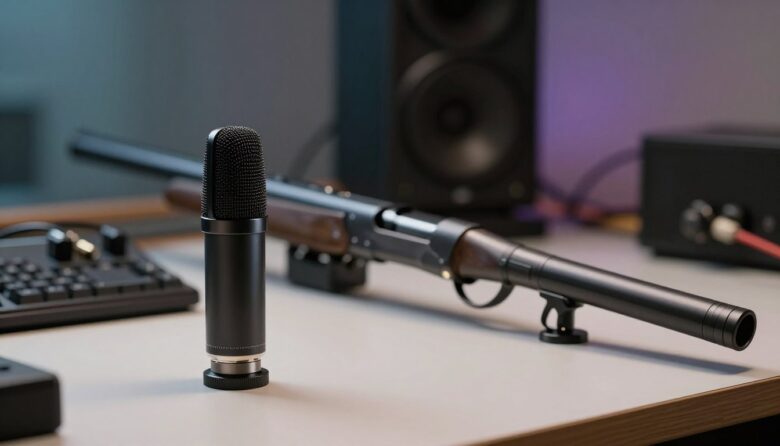
Shotgun microphone length matters, but not because a longer microphone acts like an audio zoom lens. The interference tube mainly changes how the microphone responds to sound arriving from the sides. A longer tube can extend that directional effect into lower frequencies, while a shorter tube is easier to mount, aim, and use in tight spaces.
The right choice depends on the source, recording distance, surrounding reflections, background noise, and mounting method. Placement still matters more than tube length: getting the microphone closer usually improves the balance between the wanted sound and the room or environment.
Key Takeaways
- An interference tube reduces some off-axis sound through frequency- and angle-dependent acoustic cancellation.
- Longer tubes generally maintain their directional effect to lower frequencies, but they are larger and less forgiving of poor aim.
- Short shotguns are practical for cameras, compact rigs, tight interiors, and close boom placement.
- A shotgun microphone does not magnify distant sound. Keep it as close to the source as the shot allows.
- Wind protection and shock isolation are separate from directionality and must suit the microphone and conditions.
How an Interference Tube Works
A shotgun microphone normally combines a directional capsule with a slotted or perforated tube in front of it. Sound arriving on axis follows paths designed to reach the capsule with relatively consistent timing. Sound arriving from an angle enters through different ports and travels different distances inside the tube.
Those path differences create time and phase differences at the capsule. At some frequencies and angles, parts of the off-axis sound partially cancel. This acoustic interference reduces the microphone’s sensitivity to certain sounds from the sides, but it does not remove every off-axis sound equally.
Cancellation Depends on Frequency
The interference tube is more effective at some frequencies than others. High-frequency wavelengths are short enough for a relatively compact tube to create useful path differences. Lower frequencies have longer wavelengths and require a longer tube for the same degree of interference.
This is why longer tubes can remain directional farther down the frequency range. Below the range in which the tube is effective, the capsule’s underlying pattern contributes more of the microphone’s directivity. A shotgun may therefore be described as supercardioid/lobar or hypercardioid/lobar rather than simply lobar at every frequency.
For a closer look at how this changes what the microphone captures, see what off-axis rejection means in practical recording.
What a Lobar Pattern Really Means
“Lobar” describes the narrow forward pickup associated with an interference-tube microphone. The complete pattern can also include sensitivity behind the microphone and smaller lobes at particular frequencies. It should not be interpreted as a perfectly isolated beam with silent sides and rear.
Polar plots are therefore more useful when they show several frequencies. A microphone may have a fairly broad low-frequency response but become much narrower at 2 kHz, 4 kHz, or 8 kHz. Two shotguns of similar physical length can also behave differently because port design, capsule pattern, damping, and acoustic construction all matter.
- Look for polar plots at multiple frequencies, not just one simplified pattern icon.
- Check whether rejection is smooth or whether strong side and rear lobes appear.
- Remember that a moving speaker can drift off axis even when the microphone remains stationary.
Short vs. Long Shotgun Microphone Performance
Tube length affects directionality, but it does not determine sound quality by itself. A well-designed short shotgun can have smoother off-axis response than a poorly matched longer model. Frequency response, self-noise, sensitivity, mounting, and placement remain important.
Short Interference Tubes
Short shotguns provide a wider working area and are easier to keep aimed at a moving person. Their compact size also makes them practical on cameras, small stands, handheld rigs, and boom poles used in confined locations.
The trade-off is that the tube’s directional effect does not extend as far into the lower frequencies as it does with a longer design. Low-frequency traffic, machinery, room rumble, or crowd energy may therefore remain prominent even when higher-frequency sounds from the sides are reduced.
A short shotgun is often the practical choice when:
- The microphone must remain compact or out of frame.
- The subject moves unpredictably.
- The operator needs to reposition the boom quickly.
- The microphone is mounted on a camera used near the subject.
- The location offers enough control that maximum rejection is unnecessary.
Medium-Length Interference Tubes
A medium shotgun is a compromise between physical size and directional control. It can provide more off-axis rejection than a compact model while remaining manageable on a conventional boom. This makes the category useful for dialogue, interviews, broadcast work, and general location recording.
“Medium” is not a standardized performance class, however. Always compare the published polar plots, dimensions, weight, and accessory requirements of the actual models under consideration.
Long Interference Tubes
A long shotgun can extend the interference effect to lower frequencies and provide stronger isolation from some off-axis sound. That can be useful for fixed or predictable sources in noisy outdoor environments, sporting events, wildlife recording, and situations where the microphone cannot be placed as close as desired.
The narrower working area places greater demands on aiming. If the source turns away, walks across the frame, or moves outside the microphone’s on-axis region, the level and tone can change. The extra length also affects boom balance and requires a correctly sized suspension and windshield.
A long shotgun is not automatically the best choice for distant dialogue. It can improve the ratio of on-axis to off-axis sound, but it cannot restore detail that has already been lost to distance, reverberation, or a loud environment.
Practical Applications for Different Microphone Lengths
Compact On-Camera Shotguns
A compact shotgun is generally the most convenient option for vlogging, handheld video, mobile production, and run-and-gun coverage. It adds less weight to the camera and is less likely to enter the frame with a wide-angle lens.
Its usefulness still depends on subject distance. If the camera is across the room, the microphone is also across the room. The recording will contain more reverberation and background sound than it would with a microphone placed just outside the frame on a boom.
Boom-Mounted Dialogue
Short and medium shotguns are common choices for boom work because they balance directionality with manageable size. The operator can keep the microphone close, follow the speaker, and make small corrections as the blocking changes.
Whenever the production allows it, moving the microphone off the camera and closer to the speaker is usually more valuable than buying a longer tube. The comparison in boom pole versus on-camera mounting explains why that change in position can make such a large difference.
Long Shotguns for Outdoor Isolation
Long tubes are most useful when the source is predictable and stronger off-axis rejection is needed. Examples include a fixed position at a sporting event, an outdoor interview with restricted microphone placement, or a field-recording subject that cannot be approached closely.
Aim the microphone at the sound-producing area rather than merely at the person’s body. For speech, that usually means the mouth or upper chest region. Monitor with headphones because a narrow microphone can sound acceptable one moment and lose clarity as soon as the subject moves off axis.
Reflective Indoor Rooms
Shotguns can be difficult to use in small, hard rooms. Reflections from walls, floors, ceilings, and furniture enter the interference tube from many angles. Because rejection varies with frequency, those reflections can be reduced unevenly and may give dialogue a hollow or colored quality.
A shorter shotgun may be easier to manage indoors, but length alone does not solve the reflection problem. Close placement, acoustic treatment, or a compact hypercardioid microphone without a long interference tube may produce more natural results. See why shotgun microphones can sound bad indoors for a fuller troubleshooting guide.
Wind and Suspension
The interference tube does not cancel wind. Air turbulence acts directly on the microphone and can produce powerful low-frequency rumble or overload. Outdoors, use protection matched to the wind speed and the microphone’s dimensions.
Foam can help with plosives, light air movement, and gentle boom swings. Stronger wind usually calls for a furry slip-on cover or a basket-style windshield with additional fur. The guide to deadcat and foam wind protection explains where each option is appropriate.
A suitable shock mount isolates the microphone from boom movement, camera vibration, cable impacts, and handling. It should support the microphone’s weight without covering the interference ports or allowing the body to strike the windshield.
What to Check Before Buying
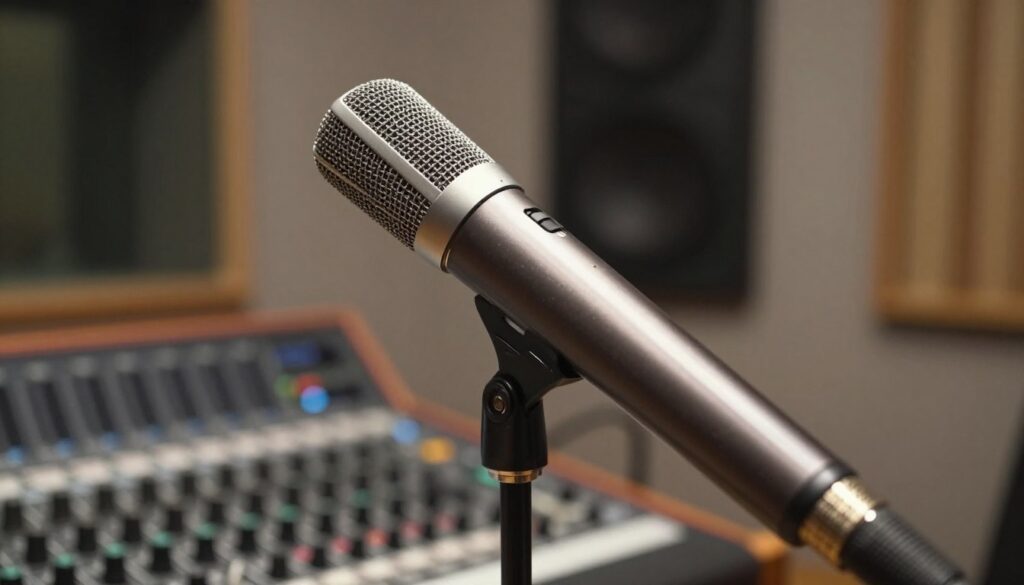
Polar Response and Off-Axis Sound
Start with the manufacturer’s polar plots. Compare the front pickup, side rejection, rear sensitivity, and consistency across frequencies. Smooth off-axis response can be as important as maximum rejection because unwanted sound that enters unevenly may be more distracting than quieter, natural-sounding ambience.
If the microphone will follow moving speakers, consider how precisely it must be aimed. A very narrow pattern is useful only when the operator or fixed setup can keep the source inside it.
Sensitivity and Self-Noise
Sensitivity describes the microphone’s electrical output for a given sound pressure, commonly stated in mV/Pa or dBV/Pa. A more sensitive microphone sends a stronger signal to the recorder and may require less preamp gain. It does not make a distant subject acoustically closer or remove room noise.
Self-noise is the noise generated by the microphone’s own electronics, usually given as an A-weighted equivalent sound-pressure level. A lower figure can matter when recording quiet ambience, subtle effects, or low-level sources. On a noisy street or busy set, environmental sound may dominate long before the microphone’s self-noise becomes important.
Do not judge either specification in isolation. A useful comparison also considers maximum SPL, dynamic range, recorder noise, and the expected level of the source.
Frequency Response
Frequency response affects the tone of dialogue and other sources. Look for a response that suits the intended use, along with any low-cut filters or presence boosts. A pronounced high-frequency rise may increase apparent speech clarity, while excessive low-frequency output can emphasize wind, traffic, or boom movement.
The microphone’s response also changes away from the front axis. Published on-axis curves cannot show the entire story, so combine them with polar data and, when possible, a controlled comparison. The article on shotgun microphone frequency response covers these specifications in more detail.
Length, Weight, and Accessories
Check the complete working rig rather than the microphone alone. A long tube may need a longer basket, larger furry cover, stronger suspension, and more careful boom balancing. These additions increase the size of the rig and may limit how close it can be positioned near ceilings, walls, or the edge of the frame.
- Confirm that the shock mount supports the microphone’s diameter, length, and weight.
- Make sure clamps and suspension parts do not obstruct the interference ports.
- Check whether suitable foam, slip-on, and basket windshields are available.
- Verify the connector and required power supply before matching the mic with a camera or recorder.
- Consider the full windshield length when deciding whether the rig will fit your shots.
A Simple Selection Guide
Choose a short shotgun when portability, close placement, quick aiming, or on-camera use matters more than maximum off-axis rejection.
Choose a medium shotgun when you need a versatile boom microphone that balances useful directionality with manageable size.
Choose a long shotgun when the source is predictable, the environment is noisy, placement is restricted, and the operator can maintain accurate aim.
Consider a non-shotgun directional microphone when recording dialogue in a reflective interior where interference-tube coloration is a recurring problem.
Whichever length you choose, prioritize placement. A compact microphone just outside the frame will often produce clearer dialogue than a longer model mounted much farther away.
FAQ
What is the main difference between a short and long interference tube?
A longer tube generally extends the microphone’s interference-based directionality into lower frequencies. A short tube is more compact and usually provides a wider, more forgiving working area. The exact result depends on the complete microphone design, not length alone.
How does phase cancellation create directionality?
Off-axis sound enters different ports and travels different path lengths to the capsule. The resulting timing differences cause partial cancellation at particular frequencies and angles. On-axis sound reaches the capsule more coherently and is captured at a higher relative level.
Does a long shotgun microphone have more reach?
Not in the sense of magnifying or zooming in on sound. A long shotgun may reduce more competing off-axis sound, making an on-axis source easier to distinguish. The source still becomes quieter relative to room reflections and environmental noise as the microphone moves farther away.
When should I use a compact on-camera model?
Compact models suit handheld shooting, vlogging, mobile rigs, event coverage, and other situations where a boom is impractical. Keep the camera reasonably close to the speaker, because the microphone cannot compensate for a distant camera position.
What is the advantage of a medium-length shotgun?
It offers a practical balance of directional control, size, and boom handling. That makes it a flexible option for interviews, dialogue, broadcast production, and general location work, although individual models should still be compared by their polar data.
When is a long shotgun worth the extra size?
Consider one for a fixed or predictable source in a noisy outdoor environment, especially when microphone placement is restricted. It is less suitable when the speaker moves quickly or the operator cannot maintain accurate aim.
Are shotguns always a good choice indoors?
No. Reflections entering from several angles can be colored by the tube’s frequency-dependent rejection. Close placement and a well-treated space can help, but a compact hypercardioid microphone may sound more natural in a small reflective room.
How should sensitivity and self-noise affect the choice?
Higher sensitivity can reduce the amount of recorder gain required, while lower self-noise benefits quiet recordings. Neither specification replaces close placement, and neither tells you how the microphone will reject off-axis noise.
Does a longer interference tube reduce wind noise?
No. Wind turbulence requires suitable wind protection. A longer microphone may actually require a larger windshield system, so include the size and cost of that system when planning the rig.
Does off-axis coloration always increase with tube length?
Not necessarily. Length changes the frequencies over which the tube is effective, but port design, damping, capsule choice, and acoustic engineering affect how smooth the off-axis response is. Compare multi-frequency polar plots and listen for tonal changes as the source moves away from the front axis.
Are long shotguns more vulnerable to handling noise?
Length alone does not determine handling noise, but a longer and heavier rig can be harder to balance. Use a suspension rated for the microphone and windshield, secure the cable, and avoid covering the interference ports.
Can one shotgun microphone cover every situation?
A short or medium model can cover many assignments when paired with suitable mounts and wind protection. It will not be ideal everywhere. Reflective interiors, highly mobile subjects, distant fixed sources, and severe wind each place different demands on the microphone and accessories.
How should I maintain an interference-tube microphone?
Keep its acoustic ports unobstructed, store it dry, inspect the cable and connector, and follow the manufacturer’s cleaning instructions. Check foam and furry wind protection for dirt or damage, and confirm that the suspension still supports the microphone without sagging or striking the windshield.
Sources and further reading

The FieldMic Pro Editorial Team creates practical, research-based guides about microphones, recording techniques, audio equipment, and sound troubleshooting. Our articles are reviewed using official documentation, technical references, and clearly identified sources.