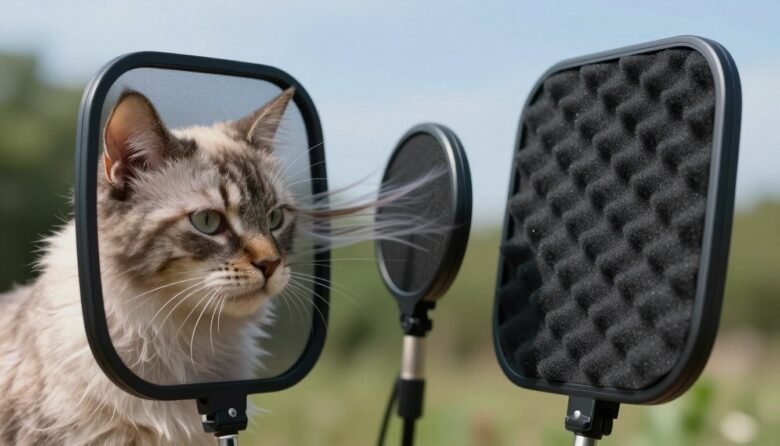
Wind noise can ruin an otherwise usable outdoor recording. It often arrives as heavy low-frequency rumble, intermittent thumps, or distortion that is difficult to repair later. The right protection depends on how much air is moving, the microphone’s design, and whether the mic is mounted on a camera, boom pole, or stand.
A foam windscreen is a sensible choice for indoor drafts, breath noise, and light air movement. A furry windshield—often called a deadcat—is intended for more demanding outdoor conditions. When wind is sustained or unpredictable, a basket-style blimp provides a larger protected air space around the microphone and is usually the more reliable option.
This guide explains what each design does, how to choose the appropriate level of protection, and why fit matters as much as the material itself.
Key Takeaways
- Use foam for light wind, indoor drafts, and plosives.
- Use a furry windshield for outdoor recording in moderate or variable wind.
- Move to a blimp or basket system when gusts overwhelm a slip-on cover.
- A deadcat is not one standardized design. Some models combine foam and fur, while others fit over a separate foam windscreen or basket.
- Cover every acoustic slot specified by the manufacturer and confirm both diameter and usable internal length before buying.
- A windshield reduces air noise; a shock mount addresses vibration and handling noise.
Why Wind Creates So Much Microphone Noise
Wind noise is not simply environmental sound arriving from a distance. It is caused largely by turbulent air and uneven pressure at the microphone’s acoustic openings. These pressure changes can produce strong low-frequency energy and may overload the capsule or recording input.
Directional pressure-gradient microphones are generally more vulnerable to wind than pressure-operated omnidirectional microphones. A shotgun microphone adds an interference tube with openings along its body, so wind protection must cover the relevant slots as well as the front of the microphone. The problem is not an “open-back capsule,” as is sometimes claimed; it is the microphone’s pressure-gradient operation and exposure of its acoustic ports to moving air.
A low-cut filter can reduce some residual rumble, but it is not a substitute for physical wind protection. Once a gust has overloaded the microphone or recorder, filtering cannot reconstruct the original dialogue.
How Foam, Fur, and Blimps Work
Foam Windscreens
Microphone windscreens use open-cell foam, which allows sound to pass while slowing and dispersing moving air. Foam also helps reduce plosives when a microphone is close to a speaker.
Foam is compact, inexpensive, and quick to install, but it is intended mainly for light wind. It may be enough for air conditioning, a slowly moving boom indoors, or a sheltered outdoor location. It is less dependable when gusts strike the microphone directly.
Foam can slightly attenuate high frequencies, particularly when it is thick, poorly made, compressed against the capsule, or wet. Use a windscreen designed for audio rather than packaging foam or another closed-cell material.
Furry Windshields and Deadcats
Synthetic fur adds a deeper, irregular outer layer that disrupts turbulent airflow before it reaches the microphone. Depending on the product, the fur may be bonded to foam, fitted over a foam windscreen, or made to cover a basket.
That construction difference matters. The word “deadcat” is an informal description, not a technical standard. A thin universal fur sleeve and a fitted foam-and-fur windshield may perform differently even if they look similar.
A slip-on furry windshield is a practical middle ground for outdoor interviews, mobile video, and camera-mounted microphones. It is less bulky than a blimp but offers more protection than foam alone. The trade-offs can include added size, possible high-frequency attenuation, and fur entering the camera frame if the microphone is positioned too close to the lens.
Basket and Blimp Systems
A blimp places the microphone inside a rigid or semi-rigid basket, leaving an air gap between the microphone and the outer surface. The basket slows the wind away from the capsule and acoustic slots. Many systems also include an internal suspension to reduce vibration transmitted through a boom pole or handle.
A separate furry cover can be fitted over the basket for additional protection. This combination is appropriate for sustained wind, exposed locations, fast boom movements, and production work where repeating a take would be difficult.
Blimps are larger, heavier, and more expensive than slip-on covers. Their extra weight also matters during long boom sessions, so the windshield should be considered as part of the complete microphone and mounting system.
Foam vs. Deadcat: Which Should You Use?
Choose Foam When
- You are recording indoors near HVAC airflow or an open window.
- The microphone will move slowly through otherwise still air.
- You need basic protection from breath noise or plosives.
- The outdoor location is sheltered and the air movement is light.
- You need the smallest possible cover for an on-camera microphone.
Choose a Furry Windshield When
- You are filming outdoors in noticeable or changing wind.
- The microphone is mounted on a moving camera or handheld rig.
- You are recording interviews in an exposed location.
- A foam windscreen still produces intermittent rumble or thumps.
- You need more protection without the size of a full blimp.
Choose a Blimp When
- Wind is sustained, gusty, or striking the microphone from different directions.
- The microphone is being moved quickly on a boom.
- You need both wind protection and effective suspension from handling vibration.
- The recording cannot easily be repeated.
- A slip-on furry windshield is not controlling the lowest-frequency rumble.
There is no dependable universal wind-speed limit for each category. Performance varies with the microphone, windshield construction, direction of the wind, condition of the fur, and the test method used. Exact attenuation figures from different manufacturers should not be compared unless they were measured under equivalent conditions.
Assessing the Recording Environment
Controlled Indoor Rooms
In a quiet room with little air movement, a microphone may not require a windscreen. Avoid adding a thick cover automatically, because every layer has the potential to alter the sound slightly.
Foam becomes useful when the microphone is close to a speaker, positioned under an air-conditioning vent, or moved through the air. Mechanical vibration is a separate problem. Use a suitable suspension rather than expecting foam to remove knocks and cable-borne noise. See why a shotgun microphone needs a shock mount for a closer look at that distinction.
Uncontrolled Indoor Spaces
Lobbies, event halls, workshops, and untreated offices may contain stronger airflow than expected. HVAC systems, fans, open doors, and rapid boom movement can all create low-frequency disturbances.
Start with fitted foam and monitor through headphones. A small furry cover may be justified near strong ventilation, but a thick outdoor windshield should not be used solely to address room echo or background voices. Those problems require better microphone placement and room control.
Outdoor Recording
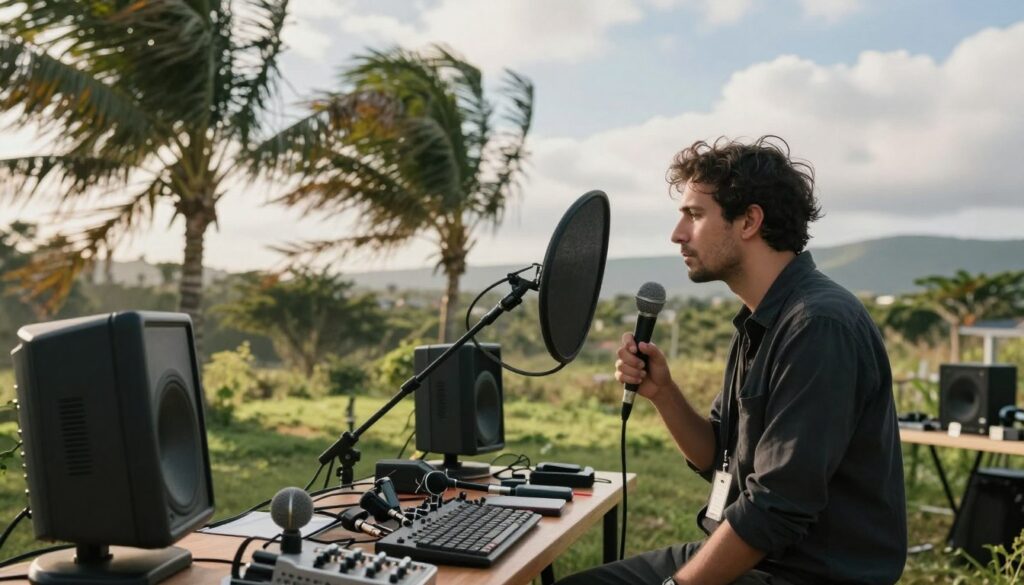
For outdoor work, carrying both foam and fur allows the protection to be adjusted as conditions change. If the microphone is exposed to direct gusts, begin with the furry option rather than waiting for a take to fail.
Microphone distance still matters. Moving a protected microphone closer to the speaker generally gives dialogue a better chance against environmental noise. The guide to boom-pole versus on-camera mounting explains why a well-positioned boom microphone often outperforms a more distant camera-mounted mic.
How to Ensure the Windscreen Fits
A windshield must cover the microphone’s active acoustic openings without slipping, rubbing, or leaving a path for wind. Universal labels such as “small,” “medium,” and “shotgun size” are not precise enough on their own.
Measure the Relevant Length
For a slip-on shotgun windshield, measure from the front of the microphone to the final interference-tube slot that needs protection. This is often more important than the microphone’s total body length. A manufacturer may describe this measurement as slot length, internal depth, or maximum microphone length.
For example, RØDE specifies the WS6 for microphones with a maximum slot length of about 160 mm and a diameter of 21 to 22.5 mm. It is therefore not a universal fit for every shotgun microphone, even if the product looks long enough in a photograph.
Check the Diameter
The opening should seal around the microphone body as intended by the manufacturer. A loose base can let air reach the rear of the protected area, while an undersized opening may tear, deform the foam, or make the cover difficult to install.
Shotgun microphones commonly use slim cylindrical bodies, but their diameters are not identical. Do not assume that a cover made for one model will fit another without checking the specification.
Confirm Basket Compatibility
A blimp needs enough internal space for the microphone, connector, cable, and suspension. The microphone should not touch the basket, and the acoustic slots must remain inside the protected area.
The current RØDE Blimp, for example, is specified for compatible shotgun microphones up to 325 mm long. Other systems use model-specific compatibility charts, so always check the manufacturer’s finder or manual rather than relying only on total external dimensions.
Inspect the Installation
- Make sure the foam is not crushed against the front of the microphone.
- Cover all slots or ports identified by the manufacturer.
- Check that the cover cannot rotate or slide during movement.
- Keep loose fur away from the camera lens and frame.
- Listen for rubbing between the windshield, cable, mount, and microphone body.
- Brush or arrange matted fur according to the product’s care instructions.
Practical Windshield Options
Basic Foam
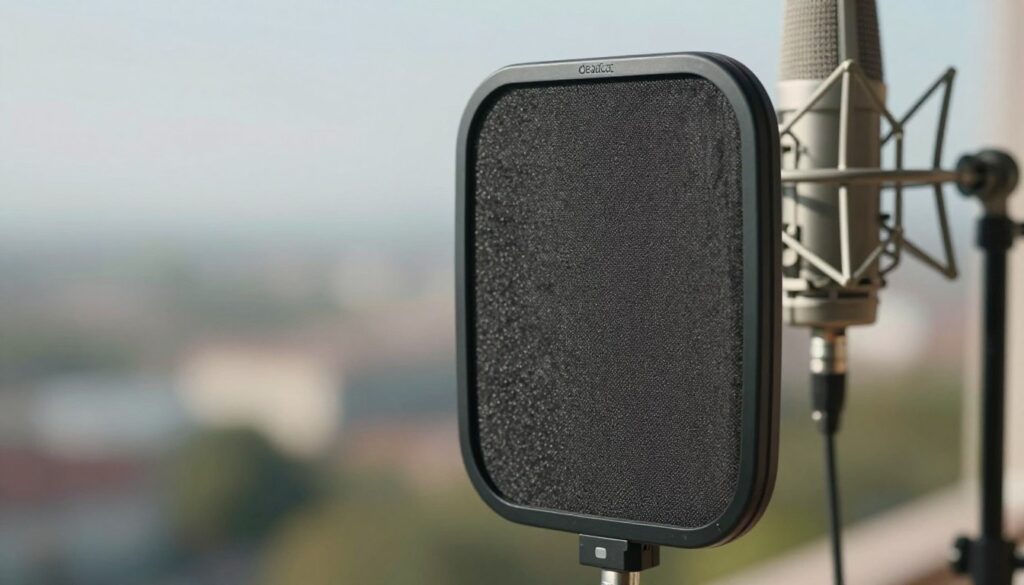
A model-specific open-cell foam windscreen is the simplest option for indoor work and light outdoor air movement. Rycote, RØDE, Sennheiser, Shure, and other microphone manufacturers offer foam covers sized for particular microphone bodies or slot lengths.
Choose based on fit rather than the lowest price. Foam that is too loose can shift and rub, while dense or poorly fitted material may affect the microphone more than a properly designed windshield.
Slip-On Foam and Fur
Products such as the Rycote Softie and RØDE WS6 combine a supportive inner structure with synthetic fur. This category suits location recording where portability matters but foam is no longer sufficient.
Rycote offers its Softie design in multiple lengths and diameters. The RØDE WS6 is intended for specific RØDE NTG microphones and other models that fall within its published slot-length and diameter limits. Neither should be selected by appearance alone.
Full Basket Systems
The RØDE Blimp and Rycote basket systems combine a windshield enclosure with microphone suspension. A furry outer cover can then be added for more demanding weather. These systems are more cumbersome, but their larger protected air volume makes them better suited to strong or inconsistent wind than a simple slip-on cover.
Before buying a blimp, consider the total weight of the microphone, windshield, fur, cable, and boom. A system that is comfortable on a short handheld grip may become tiring when extended overhead. A balanced mounting setup is as important as the windshield itself.
Wind Protection Does Not Fix Every Noise Problem
A deadcat cannot remove camera vibration, loose cable taps, electrical hiss, clipping, or room reflections. These noises may appear alongside wind rumble, but each has a different cause.
- Knocks and vibration: Check the shock mount, cable routing, and boom technique.
- Constant electronic hiss: Review the recorder’s preamp, microphone output, and gain structure. The guide to fixing hiss and background static covers those checks.
- Harsh distortion: Lower the recording level and verify that the microphone or input is not overloading.
- Distant, noisy dialogue: Move the microphone closer rather than relying on a more directional mic or thicker windshield.
- Indoor echo: Change the room, microphone position, or microphone type. Wind protection will not remove reflections.
A Simple Location-Test Workflow
Test the complete setup before recording an important take. Wind can vary over a few minutes, and a windshield that worked beside a building may fail in an open area.
- Monitor through closed-back headphones while the microphone is in its final position.
- Record at least 20 to 30 seconds of speech and ambient sound.
- Turn the microphone toward and away from the wind to check different angles.
- Move the camera or boom at the speed expected during the take.
- Listen for deep thumps, rubbing fur, cable taps, and mount creaks.
- Leave sensible headroom instead of setting peaks close to the recorder’s maximum level.
- If gusts are still audible, move to a more protective windshield or a sheltered microphone position.
Wind hits can produce unexpectedly high levels, so correct gain remains important even with a windshield. See how to set gain and prevent clipping before recording in unpredictable conditions.
Conclusion
Foam, fur, and blimps are different levels of the same basic solution: slowing turbulent air before it reaches the microphone. Foam is compact and appropriate for light wind or indoor drafts. A fitted furry windshield is the practical choice for much outdoor video work. A full basket with an optional fur cover offers the strongest protection when the microphone is exposed to sustained wind or rapid movement.
Do not choose by appearance or marketing figures alone. Measure the microphone, cover the correct acoustic ports, check compatibility, and test the assembled recording rig on location. Good fit, sensible placement, proper suspension, and conservative gain settings work together to keep wind from becoming an unusable take.
FAQ
What is the main difference between a deadcat and a foam windscreen?
Foam is intended primarily for light wind, indoor airflow, and plosives. A deadcat uses synthetic fur to provide more protection against outdoor turbulence. Some deadcats include foam, while others are fur covers designed to fit over a separate foam windscreen or basket.
Can foam handle outdoor wind?
Foam can work in a sheltered location with light air movement, but it is not the dependable choice for direct or gusty wind. If you can see vegetation moving or hear repeated low-frequency thumps in headphones, change to fur or a basket system.
Does a deadcat affect sound quality?
Any material placed around a microphone can affect its response. A properly designed and correctly fitted furry windshield should keep the change controlled, but some high-frequency attenuation is possible. Thick, wet, compressed, or poorly fitted material can have a greater effect.
Does a furry windshield also stop handling noise?
Not by itself. Windshields reduce the effect of moving air. Handling noise travels through the microphone body, mount, cable, boom, or camera, so it requires a suitable shock mount and careful cable routing.
Should the fur cover every slot on a shotgun microphone?
Yes, the windshield must cover the interference-tube slots specified by the microphone or windshield manufacturer. An exposed slot can allow wind to create pressure differences inside the microphone. Check the required slot length rather than relying only on total microphone length.
Is a deadcat always enough for outdoor interviews?
No. A slip-on furry cover is convenient for moderate conditions, but strong or rapidly changing gusts may require a basket or blimp with an outer fur cover. Moving to a sheltered position can also be more effective than adding layers indefinitely.
Can a low-cut filter remove wind noise?
A low-cut filter can reduce some remaining bass rumble, but it cannot undo capsule overload, recorder clipping, or heavy gusts that mask speech. Prevent the wind noise acoustically first, then use filtering only as a secondary measure.
How tight should a windscreen fit?
It should remain securely in place and seal as intended without crushing the foam against the capsule or stretching the opening beyond its design. If it slides, rubs, or leaves acoustic ports exposed, it is the wrong size or has been installed incorrectly.
When is a blimp worth the extra size?
A blimp is worthwhile for sustained wind, exposed locations, rapid boom movement, and recordings that cannot easily be repeated. It also provides a structured way to combine wind protection with suspension from handling vibration.
Should a windshield be used indoors?
Use one only when it addresses a real problem, such as plosives, ventilation airflow, or fast microphone movement. In still air, no windshield may be necessary. Avoid using a thick outdoor cover to solve unrelated issues such as room echo or distant microphone placement.
Sources and further reading

The FieldMic Pro Editorial Team creates practical, research-based guides about microphones, recording techniques, audio equipment, and sound troubleshooting. Our articles are reviewed using official documentation, technical references, and clearly identified sources.