
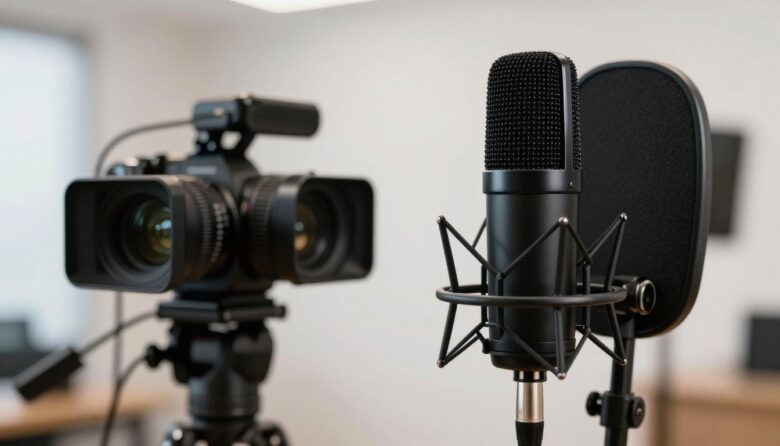
Clean on-camera audio depends on leaving enough headroom for unexpected peaks while keeping the signal comfortably above the camera’s noise floor. The goal is not to push the meter as high as possible. It is to set every stage in the recording chain so that normal speech is clear and the loudest expected moment remains …
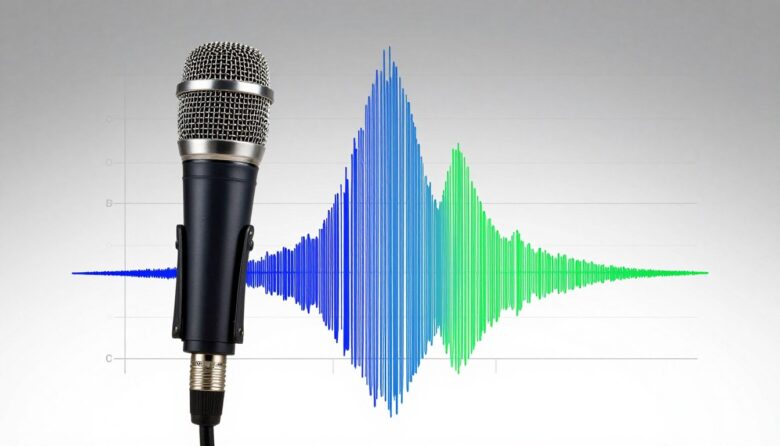
A natural-sounding voice depends on more than whether a shotgun microphone claims to cover the full audible spectrum. The shape of its frequency-response curve, its off-axis behavior, the room, and the distance from the speaker all influence the result. The most useful specification is rarely a simple range such as 20 Hz–20 kHz. A microphone …
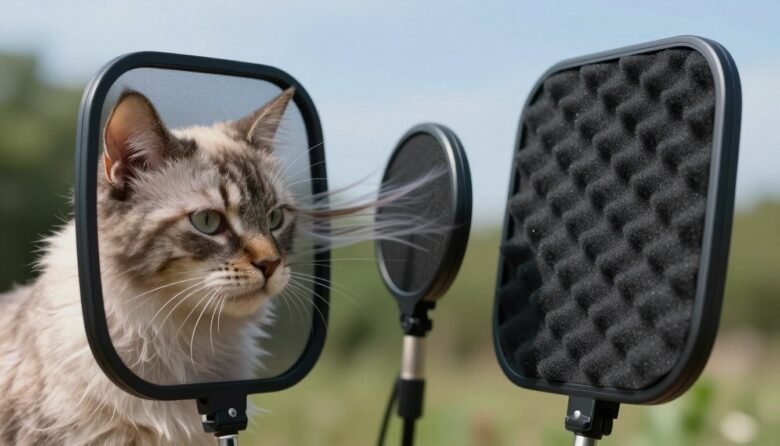
Wind noise can ruin an otherwise usable outdoor recording. It often arrives as heavy low-frequency rumble, intermittent thumps, or distortion that is difficult to repair later. The right protection depends on how much air is moving, the microphone’s design, and whether the mic is mounted on a camera, boom pole, or stand. A foam windscreen …
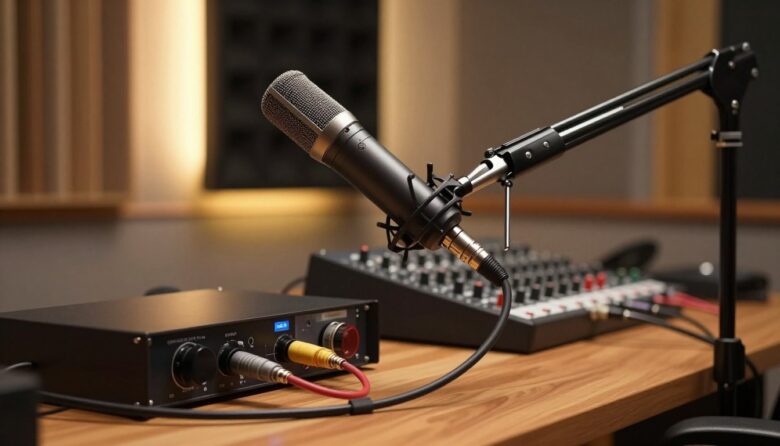
Phantom power is a DC supply sent through a balanced microphone connection to run the electronics inside many condenser microphones. It is commonly labeled 48V, +48V, or P48 on cameras, recorders, mixers, and audio interfaces. Whether your shotgun microphone needs it depends entirely on the model. Some professional XLR shotguns require P48, some can use …
Off-axis rejection describes how a microphone responds to sound arriving from outside its main pickup direction. It does not mean the microphone completely blocks everything beside or behind it. Instead, those sounds are attenuated by an amount that varies with their angle and frequency. This distinction matters with shotgun microphones. Their narrow forward pickup can …