A shotgun microphone does not pull distant dialogue closer in the way a telephoto lens enlarges a subject. It mainly reduces some sound arriving from off-axis directions. If the microphone is several feet from the speaker, the recording can still sound distant, noisy, or reverberant.
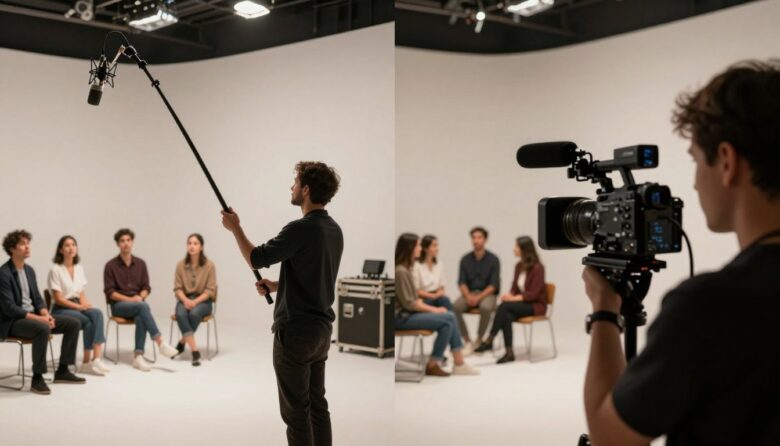
That is the practical difference between a boom pole and an on-camera mount. A boom lets you place the microphone near the speaker while keeping it outside the frame. An on-camera mount is faster and easier to manage, but its performance depends heavily on how close the camera is to the subject.
Key Takeaways
- Microphone distance usually matters more than mount type. Move the mic closer before reaching for noise reduction or more expensive equipment.
- A boom pole is generally better for interviews, narrative dialogue, wide shots, and moving subjects.
- An on-camera mic can work well for close vlogging, quick reporting, and tightly framed solo production.
- Directional microphones reduce some off-axis sound, but they do not eliminate room reflections or nearby noise.
- A shock mount, controlled cable, suitable wind protection, and correct gain are important with either setup.
Why Microphone Distance Matters
The voice reaching a microphone becomes weaker as the distance increases. Raising the input gain can restore the recording level, but it also raises room sound, background noise, and microphone self-noise. Gain cannot restore the direct, close sound that never reached the microphone strongly enough.
Moving the mic closer improves the balance between the speaker’s direct voice and the surrounding ambience. This is especially important in reflective rooms, where walls, ceilings, tables, and floors return delayed versions of the voice to the microphone.
A directional pattern helps, but it is not a substitute for placement. Understanding off-axis rejection also helps explain why pointing a shotgun mic accurately matters: sound arriving from the side may be reduced or colored, while sound directly in front remains strongest.
Boom Pole vs. On-Camera Mounting
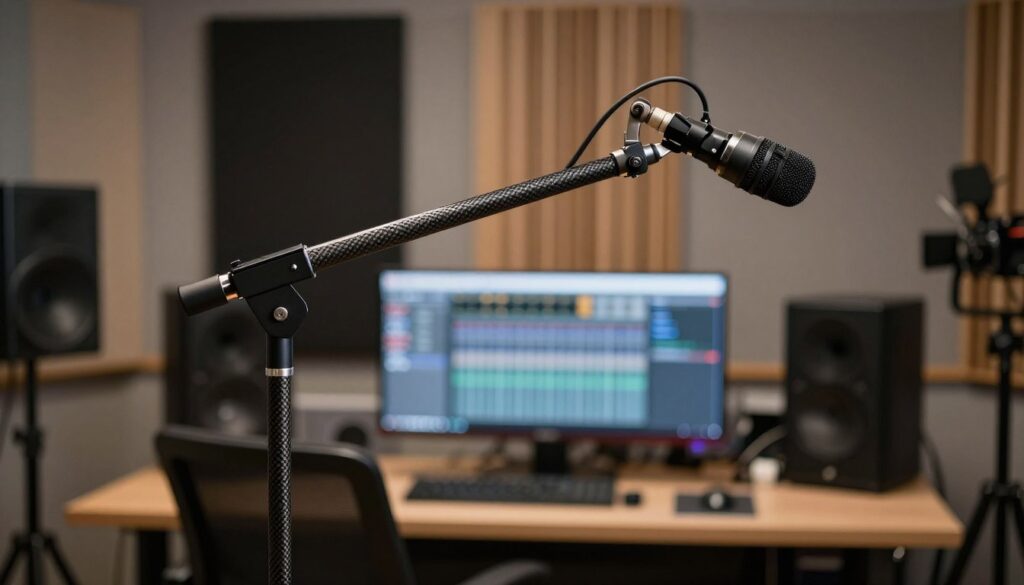
With a traditional boom, the microphone and camera can be positioned independently. The camera may move back for a wider composition while the mic remains just outside the frame. A boom operator can also follow a person who turns, walks, or speaks with another subject.
An on-camera microphone stays attached to the camera. That is convenient, but every change in camera distance also changes microphone distance. Moving from a close-up to a wide shot may improve the picture while making the dialogue more distant.
Some camera-mounted extensions place the mic farther forward than a normal shoe mount. This can help in a tight setup, but the microphone is still tied to the camera’s position and movement. It does not offer the same placement freedom as a separate boom pole or stand.
Benefits of a Traditional Boom Pole
Closer Placement Outside the Frame
The main advantage is simple: a boom can put the microphone close to the speaker without showing it. The exact distance depends on the framing, room, microphone, speaker volume, and background noise, so there is no universal number that fits every production.
Move the mic as close as the shot permits, then listen. If the voice becomes overly bass-heavy, catches strong breaths, or sounds unnatural, adjust the distance and angle rather than following a fixed rule.
Better Control During Movement
A boom operator can keep the microphone aimed at the active speaker and maintain a more consistent distance as the scene develops. This is valuable for conversations, walking interviews, unscripted exchanges, and scenes in which people turn away from the camera.
For a locked-off interview, a second person may not be necessary. A boom pole can be secured to a suitable stand and positioned above the subject. The stand must be stable, properly counterweighted, and kept clear of people who could bump or trip over it.
Flexible Microphone Selection
A boom can carry a shotgun microphone outdoors or a shorter directional microphone in a reflective interior. Long interference tubes are not automatically better in every room. Reflections arriving from different angles can affect the tone, so microphone length, polar pattern, and placement should be chosen for the location. See the guide to shotgun microphones indoors for more detail.
Where to Position a Boom Microphone
Booming from above is a common starting point. Place the microphone just outside the upper edge of the frame and aim it toward the speaker’s mouth. This keeps the equipment away from the subject and often allows the mic to point toward a relatively quiet floor rather than a reflective ceiling.
Booming from below can work when lighting, framing, hats, or scenery prevent overhead placement. Listen carefully, because the voice may change when captured from a different angle. Also check what lies behind the speaker in the microphone’s pickup direction.
Avoid aiming a shotgun microphone directly at a hard nearby surface when another angle is available. A bare ceiling, tile floor, window, or wall can send reflections back toward the mic and make dialogue sound hollow or colored.
Practical Boom Technique
- Confirm the frame edge before recording and recheck it after camera changes.
- Aim at the current speaker rather than leaving the mic between two people.
- Move smoothly and avoid tapping, rubbing, or tightly gripping the pole.
- Secure external cable so it cannot strike the pole as it moves.
- Monitor through headphones and record a short test before the full take.
When On-Camera Mounting Works Well
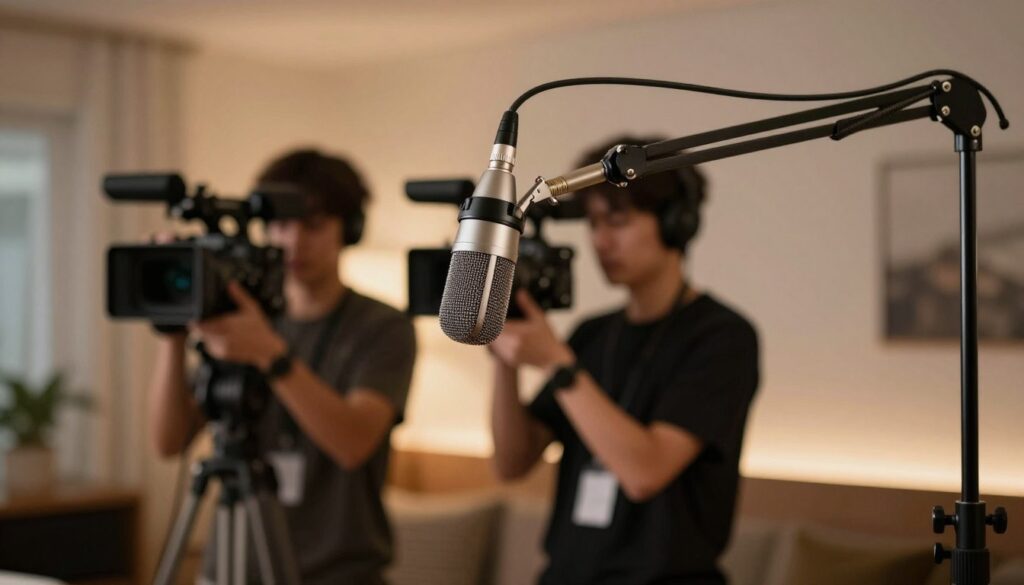
An on-camera microphone is useful when speed and mobility matter more than independent placement. It can be a sensible choice for close handheld vlogging, behind-the-scenes coverage, event ambience, documentary inserts, or a reporter speaking near the lens.
The key condition is distance. If the camera is close to the person, the microphone may also be close enough for usable dialogue. If the camera is across the room, attaching a more directional mic to it will not make the speaker sound as though the mic were overhead.
Limits to Expect
- Wide shots place the microphone farther from the subject.
- Camera handling, autofocus motors, lens controls, and cables may transmit vibration into the mic.
- Panning the camera changes where the microphone points.
- The camera position may force the microphone to face a reflective surface or unwanted sound source.
- A mic suitable for a single close speaker may not cover a group evenly.
A proper suspension helps isolate mechanical vibration. The mount must also support the microphone and windshield without sagging or blocking the interference-tube slots. More guidance is available in why a shotgun mic needs a shock mount.
How to Choose Between the Two
Choose a Boom Pole When:
- Dialogue is the main purpose of the recording.
- The shot is too wide for a camera-mounted mic to remain close.
- The subject moves, turns, or speaks with other people.
- You need to change the microphone or angle for the room.
- A boom operator or safe stand-mounted setup is available.
Choose an On-Camera Mount When:
- The camera remains physically close to the speaker.
- You are working alone and must move quickly.
- The microphone is mainly capturing reference sound, ambience, or short comments.
- Using a separate stand or boom would interfere with the location.
- The recording can be supported by a lavalier or another close microphone.
For a seated interview, a stand-mounted boom is often the strongest solo option. For a moving presenter, a lavalier may be easier to manage than either method. The comparison of a shotgun mic and lavalier for interviews covers that alternative.
Essential Equipment for Either Setup
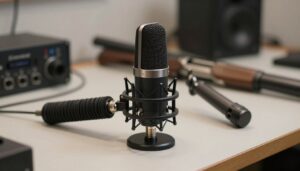
- Shock mount: Isolates the microphone from vibration transmitted through the camera, stand, pole, and cable.
- Suitable windshield: Foam can help with light air movement and boom swings, while stronger outdoor wind generally requires more substantial protection. The guide to foam and furry wind protection explains the difference.
- Compatible connection and power: Confirm whether the mic requires plug-in power, battery power, or phantom power and whether the camera or recorder supplies it.
- Secure cable routing: Prevent loose cable from tapping the pole, mount, or camera body.
- Headphones: Listen for clothing noise, handling vibration, wind, distortion, and unexpected background sounds.
Set recording gain after the microphone is in its final position. Leave room for louder words and unexpected peaks rather than recording close to the clipping point. If levels are difficult to control, follow the practical guide to setting gain and preventing clipping.
A Simple Setup Workflow
- Choose the frame and identify the closest safe microphone position.
- Listen to the room for HVAC, traffic, refrigerators, fans, and reflective surfaces.
- Select the mounting method that can maintain that position throughout the shot.
- Fit the shock mount and wind protection required for the conditions.
- Aim the microphone at the speaker and secure the cable.
- Set gain while the subject speaks at the expected performance level.
- Record a test, review it through headphones, and adjust before continuing.
FAQ
What is the main difference between a boom pole and an on-camera mount?
A boom pole separates microphone placement from camera placement. An on-camera mount keeps the setup compact, but the microphone moves wherever the camera moves.
Can an on-camera shotgun mic record professional dialogue?
It can produce good results when the camera is close, the environment is controlled, and the mic is aimed correctly. It is less suitable for distant subjects, wide shots, and reflective rooms.
How close should a boom mic be?
As close as the framing and natural sound permit. Use the edge of the frame as a starting limit, then adjust the distance and angle while monitoring the voice, breaths, room tone, and plosives.
Should the boom mic be above or below the speaker?
Above is a common starting position because it keeps the equipment out of the subject’s way. Below can work when the shot or location prevents overhead placement, but the change in angle may alter the voice.
Do directional microphones remove background noise?
No. They reduce sound arriving from some directions, but they still capture noise and reflections within their pickup pattern. Moving closer and reducing the noise at its source remain important.
Is a boom operator always required?
No. A stationary interview can use a safely supported boom stand. A dedicated operator becomes more valuable when subjects move, multiple people speak, or the frame changes during a take.
Can poor placement be repaired in post-production?
Noise reduction and dialogue-processing tools may improve a recording, but aggressive processing can introduce artifacts. They cannot fully recreate the direct, close dialogue that better microphone placement would have captured.
Which method should a solo creator start with?
Use an on-camera mic when the camera remains close and mobility is essential. For a fixed interview, placing the mic on a stand-mounted boom usually provides more control without requiring a second person.
Sources and further reading

The FieldMic Pro Editorial Team creates practical, research-based guides about microphones, recording techniques, audio equipment, and sound troubleshooting. Our articles are reviewed using official documentation, technical references, and clearly identified sources.