Off-axis rejection describes how a microphone responds to sound arriving from outside its main pickup direction. It does not mean the microphone completely blocks everything beside or behind it. Instead, those sounds are attenuated by an amount that varies with their angle and frequency.
This distinction matters with shotgun microphones. Their narrow forward pickup can reduce distracting sound from the sides, but it cannot make a distant voice sound close or remove noise coming from the same direction as the subject. Clean dialogue still depends on distance, aiming, room acoustics, and the position of the unwanted sound.
Key Takeaways
- Off-axis rejection is attenuation, not total silence.
- A polar pattern changes with frequency, so one microphone can reject high and low frequencies differently.
- Shotgun microphones use an interference tube to increase directionality, especially at higher frequencies.
- Background noise is reduced most effectively when it arrives from a well-rejected angle.
- Getting the microphone closer usually improves clarity more reliably than choosing a longer shotgun mic.
- Indoor reflections can expose uneven off-axis response and make some shotgun recordings sound hollow or colored.
What Off-Axis Rejection Actually Means
The front of a directional microphone is described as on-axis. Sound arriving from the sides, rear, or any angle outside that main direction is off-axis. Off-axis rejection is the reduction in sensitivity at those angles compared with the microphone’s on-axis response.
Two characteristics need to be considered separately:
- Degree of rejection: how much quieter an off-axis sound becomes.
- Quality of rejection: whether the remaining sound keeps a natural tonal balance or becomes thin, dark, hollow, or phasey.
A microphone can provide substantial side attenuation while still giving the remaining room sound an uneven frequency balance. This is why the greatest numerical rejection is not automatically the best choice for every recording.
Polar Patterns Are Frequency-Dependent
A polar-pattern diagram maps a microphone’s sensitivity around the capsule. An omnidirectional microphone is designed for pickup from every direction. A cardioid microphone is most sensitive at the front and typically has its deepest null directly behind it. Supercardioid and hypercardioid patterns narrow the forward pickup but introduce a rear lobe.
For an idealized supercardioid pattern, the least-sensitive angles are roughly 125 degrees from the front. For a hypercardioid, they are closer to 110 degrees. In practice, the correct angles should be checked on the individual microphone’s polar diagrams.
Do not rely on a single 1 kHz polar plot. A microphone described as cardioid or supercardioid at one frequency may become wider, narrower, or more irregular elsewhere in the spectrum. Manufacturer diagrams showing several frequencies provide a more useful picture of how speech, reflections, traffic, and other sounds will be captured.
How a Shotgun Microphone Becomes Directional
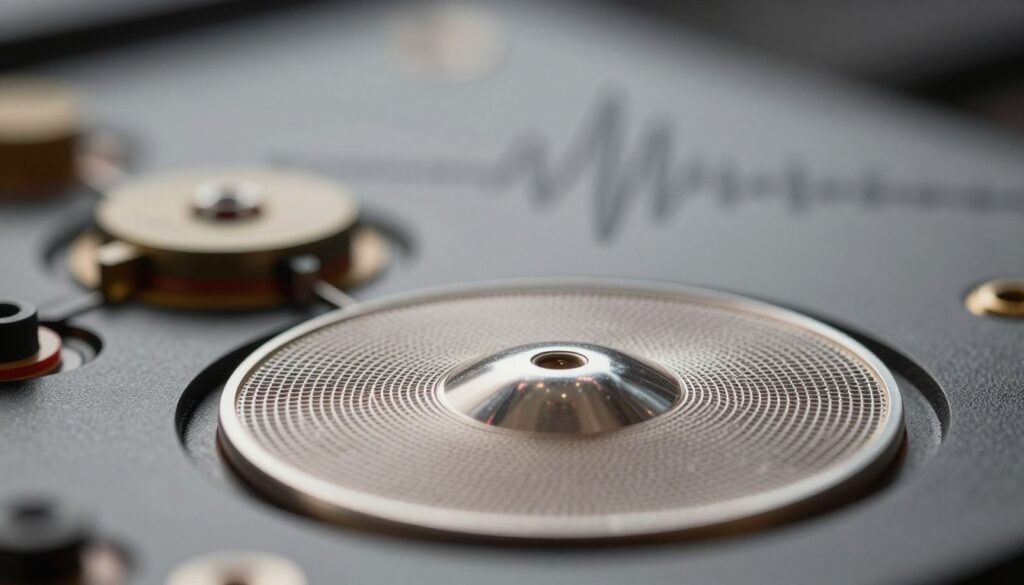
A conventional pressure-gradient capsule creates directionality by exposing its diaphragm to sound through more than one acoustic path. The timing and pressure differences between those paths help form patterns such as cardioid, supercardioid, or hypercardioid.
A shotgun microphone adds an interference tube in front of a directional capsule. The slots along the tube allow sound to enter at several points. Sound arriving from directly in front follows similar paths to the capsule and is largely preserved. Sound entering from the side travels through paths of different lengths, producing timing differences that cause partial cancellation.
The cancellation is not uniform at every angle or frequency. It is generally more effective at higher frequencies, while the underlying capsule provides much of the low- and mid-frequency directionality. For example, Sennheiser describes the MKH 416 as having a supercardioid response at low and middle frequencies that transitions toward a lobar pattern at higher frequencies.
Why Shotgun Polar Patterns Have Lobes
The term lobar refers to the narrow forward pickup and the smaller areas of sensitivity that can appear at the sides or rear. These lobes mean a shotgun microphone does not reject every off-axis direction equally.
A noise source may be strongly reduced at one angle but remain audible after the microphone is rotated slightly. The pattern can also change across the frequency range, so the low-frequency rumble of a vehicle and the high-frequency hiss of its tires may be attenuated by different amounts.
How Interference-Tube Length Changes Directionality
A longer interference tube can maintain increased directionality farther down the frequency range. It can therefore provide more off-axis attenuation than a short tube under suitable conditions. The trade-off is a narrower working angle, greater sensitivity to aiming errors, and a longer microphone that may be difficult to keep out of frame.
A short shotgun is generally easier to boom in small spaces or over moving speakers. A long model may be appropriate when the source position is predictable and competing sound comes from useful rejection angles. See the comparison of short and long shotgun microphones for a closer look at those trade-offs.
What a Shotgun Mic Can and Cannot Do About Background Noise
A shotgun microphone does not identify dialogue and remove everything else. It responds according to direction, frequency, and level. Noise coming from the sides may be reduced, while noise coming from the front remains prominent.
Situations Where Directionality Helps
- A speaker is in front of the microphone while traffic is passing across the sides.
- A boom microphone can be aimed at the mouth while a relatively steady noise source sits near one of the microphone’s nulls.
- The recording is outdoors, where there are fewer nearby surfaces reflecting sound back toward the microphone.
- The microphone can remain close and accurately aimed as the speaker moves.
Situations Where It Helps Less
- The unwanted sound is directly behind the subject and therefore close to the microphone’s forward axis.
- Noise surrounds the microphone or reaches it from many directions.
- The room is highly reverberant, causing reflections to arrive through several lobes and angles.
- The microphone is mounted far from the speaker on a camera.
- The problem is electronic hiss, radio-frequency interference, cable noise, or preamp noise rather than acoustic background sound.
Directionality cannot repair noise created later in the signal chain. If the recording contains steady electronic noise even in a quiet room, use the separate guide to diagnosing hiss and background static.
A Shotgun Mic Is Not an Audio Zoom Lens
A shotgun microphone does not magnify a distant voice. It may make the voice easier to hear by reducing some sound arriving from other directions, but the direct sound still becomes weaker as the microphone moves away.
This is why a well-positioned boom usually produces cleaner dialogue than an on-camera mic several feet farther away. If both mounting methods are available, the practical differences are covered in boom-pole versus on-camera microphone placement.
Off-Axis Coloration and Comb Filtering
Interference is central to a shotgun microphone’s operation. When related sound waves reach the capsule at different times, they reinforce at some frequencies and cancel at others. The resulting peaks and dips can change the tone of an off-axis voice or reflection.
This frequency-dependent effect is often described as comb filtering. It may make reflected sound seem hollow or phasey, particularly when strong reflections enter through the interference tube from several angles. The severity depends on the microphone design, the frequency content, and the room.
Diaphragm size alone does not predict off-axis quality. Capsule geometry, acoustic ports, interference-tube design, and the complete microphone body all contribute to the result. Some large-diaphragm microphones are specifically engineered for smooth off-axis response, while microphones of the same general size can behave very differently. Evaluate the published polar plots and, where possible, listen to the microphone in the intended space.
Frequency response should also be judged beyond the main on-axis curve. The guide to frequency response in shotgun microphones explains how tonal balance affects the naturalness and intelligibility of recorded speech.
Why Shotgun Mics Can Be Difficult Indoors
Outdoors, most sound reaching a boom microphone may come directly from the speaker and the wider environment. Indoors, the voice also reflects from the ceiling, floor, walls, windows, and furniture. Those delayed reflections reach the shotgun’s tube from different angles and may be attenuated unevenly.
The result can be less natural than expected, even when the microphone appears to have strong side rejection. A highly reflective room may produce a hollow, distant, or inconsistent tone as the boom moves.
This does not mean a shotgun microphone always fails indoors. A short shotgun with smooth off-axis response can work well in a controlled room, particularly when it is close to the speaker. However, a compact supercardioid or hypercardioid microphone without a long interference tube may produce more consistent dialogue in a small reflective space.
Before replacing the microphone, try moving it closer, changing its angle, and avoiding a direct aim toward a hard ceiling or wall. More options are covered in why shotgun microphones can sound bad indoors.
Practical Placement for Better Rejection
Get Close Before Chasing a Narrower Pattern
Reducing microphone-to-source distance increases the proportion of direct voice relative to ambient sound. For dialogue, place the mic just outside the frame and aim it toward the speaker’s mouth or upper chest. The best aiming point depends on the voice, framing, and desired tonal balance.
A distant long shotgun is not necessarily cleaner than a nearby short shotgun or supercardioid microphone. Distance often has a greater effect on clarity than a modest difference in polar pattern.
Aim the Null, Not Just the Front
Pointing the front at the speaker is only half of the placement decision. Identify the loudest competing source and place it near a low-sensitivity angle shown in the microphone’s polar diagram.
With a cardioid microphone, that may mean placing the noise directly behind the mic. With a supercardioid or hypercardioid, the deepest nulls are angled toward the rear, and sound directly behind the microphone may enter through the rear lobe.
Watch Reflective Surfaces
Avoid aiming the rear or side lobes at a nearby hard surface when possible. A floor, wall, window, or low ceiling can return both the speaker’s voice and background noise toward the microphone.
Small changes can help:
- Move the speaker and microphone away from bare walls.
- Aim the microphone so its least-sensitive region faces the strongest noise or reflection.
- Use soft furnishings, blankets, or purpose-built absorption to reduce strong early reflections.
- Keep the boom position consistent between takes.
- Monitor through headphones while making changes instead of judging placement by sight alone.
Follow Moving Speakers Carefully
A narrow pattern requires accurate aiming. If a speaker leans or turns away, high frequencies may fall first, making the voice sound dull before the overall level drops dramatically. A slightly wider microphone can be more forgiving when several people speak or when the boom operator cannot track every movement.
Off-Axis Rejection and Feedback
Directional microphones can increase usable gain before feedback when loudspeakers are placed near their least-sensitive angles. The correct placement depends on the actual pattern.
A stage monitor can often sit directly behind a cardioid microphone, but that position may feed the rear lobe of a supercardioid or hypercardioid model. For those patterns, monitors are normally moved toward the angled nulls. Room reflections, multiple open microphones, and equalization also affect feedback, so directionality is helpful rather than absolute protection.
Choosing the Right Pattern for the Environment
- Omnidirectional: useful when natural room pickup or sound from every direction is wanted. It provides little directional isolation.
- Cardioid: offers broad forward coverage with a rear null, making it relatively forgiving for close recording and stage use.
- Supercardioid or hypercardioid: provides tighter forward pickup and stronger side attenuation, but requires attention to the rear lobe.
- Short shotgun: balances increased high-frequency directionality with manageable size and aiming requirements.
- Long shotgun: offers greater directionality across more of the frequency range but demands accurate aiming and a suitable acoustic environment.
Choose according to source distance, movement, room reflections, competing-noise direction, and available mounting position. No pattern is automatically best for every noisy location.
A Simple Setup Process
- Place the microphone as close to the source as framing and performance allow.
- Aim the microphone accurately at the intended voice or instrument.
- Identify the loudest unwanted sound and rotate or reposition the microphone so that noise approaches a useful null.
- Listen for changes in tone, not just changes in level.
- Check whether a wall, floor, or ceiling is reflecting sound into a side or rear lobe.
- If the room sounds hollow, compare a shorter shotgun or a supercardioid microphone without a long interference tube.
- Record a short test and review it through headphones before committing to the setup.
Conclusion
Off-axis rejection is best understood as controlled reduction rather than complete removal of background sound. Shotgun microphones achieve their directionality through a combination of a directional capsule and an interference tube, but their performance changes with frequency and angle.
The cleanest result usually comes from combining an appropriate microphone with close placement, accurate aiming, and sensible use of its nulls. Pay attention to where noise and reflections are coming from, and remember that a narrower pattern cannot compensate fully for excessive distance or a highly reflective room.
FAQ
What is off-axis rejection?
It is the reduction in a microphone’s sensitivity to sound arriving outside its main pickup direction. The amount of reduction depends on the sound’s angle and frequency.
Do shotgun microphones completely remove background noise?
No. They attenuate sound from selected off-axis directions. Noise arriving from the front, through a rear or side lobe, or from many directions may remain clearly audible.
Why are shotgun microphones more directional at high frequencies?
The interference tube creates path-length differences for sound entering through its side slots. These differences produce greater cancellation where the wavelengths are short enough for the tube to work effectively.
Does a longer shotgun microphone have more reach?
A longer tube can extend increased directionality to lower frequencies, but it does not magnify the source. It also creates a narrower working angle and requires more accurate aiming.
Why can a shotgun microphone sound hollow indoors?
Reflections from walls, ceilings, and floors enter the interference tube from several directions. Frequency-dependent cancellation can color those reflections and change the overall tone.
Is hypercardioid always more directional than cardioid?
It has a narrower forward pattern in its ideal form, but it also has a rear lobe. Its usefulness depends on where unwanted sound and loudspeakers are located.
Where should background noise be positioned relative to the microphone?
When possible, place the strongest noise near a low-sensitivity angle shown in the microphone’s polar plot. Do not assume that directly behind the mic is the best position for every pattern.
Will an on-camera shotgun mic isolate a person across a room?
Only to a limited extent. It may reduce side noise, but the distant voice will still be weak relative to room reflections and ambient sound. Moving the microphone closer on a boom is usually more effective.
Can EQ fix off-axis coloration?
EQ may reduce a broad tonal problem, but complex comb-filter peaks and dips are difficult to correct without affecting the wanted voice. Repositioning the microphone or choosing a more suitable design is normally the better first step.
Should polar-pattern diagrams be checked at more than one frequency?
Yes. A pattern shown only at 1 kHz does not reveal how the microphone behaves across the full speech or music range. Multi-frequency plots show where the pattern widens, narrows, or develops additional lobes.
Sources and further reading

The FieldMic Pro Editorial Team creates practical, research-based guides about microphones, recording techniques, audio equipment, and sound troubleshooting. Our articles are reviewed using official documentation, technical references, and clearly identified sources.