Short answer: A shotgun microphone is often the better choice for a stationary, carefully framed interview when it can be positioned close to the speaker and just outside the shot. A lavalier is usually more practical when the subject will move, the framing is wide, or there is no boom operator.
Neither design is automatically cleaner or more professional. Distance, placement, room acoustics, clothing, wind, and the recording input can matter more than the microphone category.
Key Takeaways
- A shotgun microphone works best when it is boomed close, aimed accurately, and kept out of frame.
- A lavalier stays attached to the subject, making it useful for walking interviews and changing camera positions.
- Shotgun directionality reduces sound arriving from some angles, but it does not eliminate room reflections or noise located behind the subject.
- Lavalier microphones avoid boom-placement problems but can pick up clothing rustle and may take longer to conceal.
- Use headphones, record a test, and leave enough level headroom to prevent clipping.
Shotgun Mic vs. Lavalier: The Main Difference
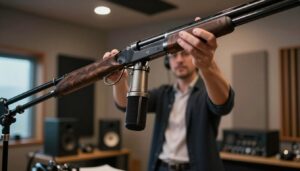
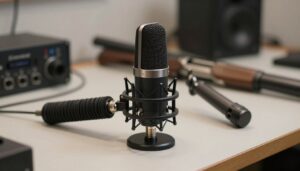
A shotgun microphone is normally placed away from the subject, often above the frame on a stand or boom pole. Its interference-tube design increases directionality, particularly at higher frequencies, so it is less sensitive to some sound arriving from the sides.
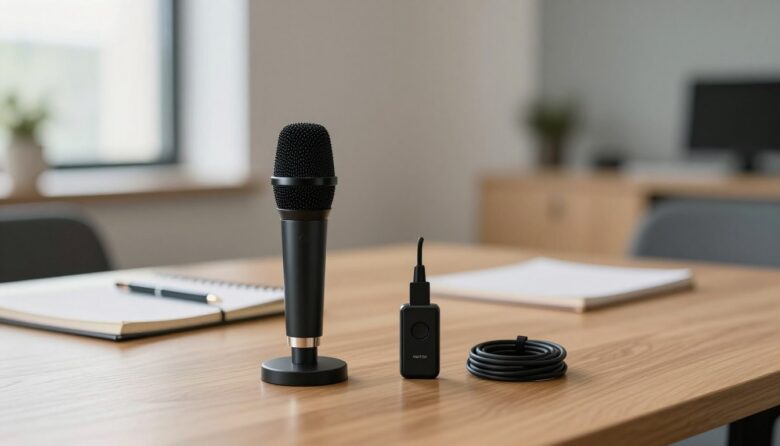
A lavalier, also called a lav or lapel microphone, is attached directly to the subject’s clothing. Because it stays close to the body, its distance from the speaker remains relatively stable as the person moves around the set.
That difference shapes the entire workflow. A shotgun keeps the subject free of visible microphones and cables, but someone must position it accurately. A lavalier provides mobility, but the microphone, cable, transmitter, clothing, and wind protection all need attention.
When a Shotgun Microphone Is the Better Choice
Stationary sit-down interviews
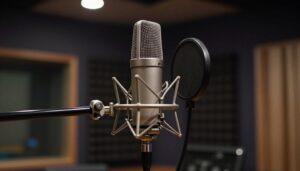
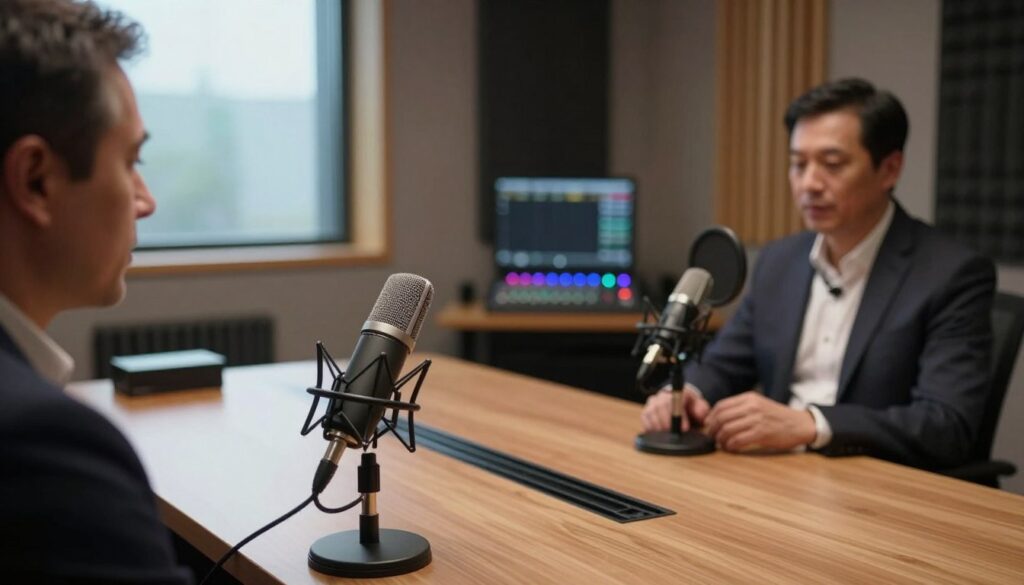
A shotgun is a strong option when the subject will remain seated and the camera framing is locked. Mount the microphone above and slightly in front of the subject, keep it just outside the frame, and aim it toward the mouth or upper chest.
The important factor is proximity. A shotgun microphone is directional, but it is not an audio zoom lens. Moving it closer generally increases the voice level relative to room sound, traffic, ventilation, and other unwanted noise.
For a practical comparison of microphone positions, see boom-pole versus on-camera mounting. A microphone mounted on the camera may be convenient, but its distance from the subject increases whenever the camera moves back.
Keeping the microphone out of view
A boomed shotgun can capture dialogue without placing hardware on the interviewee. This is useful when clothing cannot support a lavalier, the subject does not want to wear a transmitter, or the production wants to avoid a visible clip and cable.
A natural voice without clothing interference
Correctly positioned, a shotgun avoids fabric rustle and the tonal changes that can occur when a lavalier is covered by clothing. It also gives the interviewer more freedom to adjust wardrobe between takes without remounting a microphone.
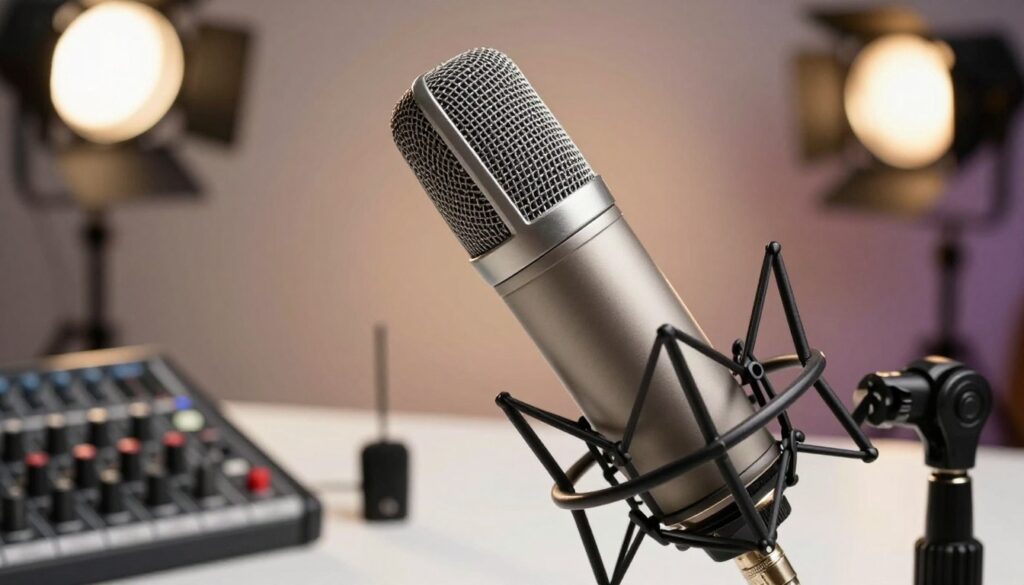
However, directional pickup should not be confused with complete noise removal. A sound arriving from the microphone’s less-sensitive angles may be reduced, while noise in the same direction as the subject can remain prominent. The practical limits are explained further in this guide to off-axis rejection.
When a Lavalier Is the Better Choice
Walking or moving interviews
A lavalier follows the subject. That makes it useful for walk-and-talk interviews, demonstrations, wide shots, and situations in which the camera position changes frequently.
A chest-mounted lav does not maintain a perfectly fixed relationship with the mouth. Turning the head, leaning forward, or covering the microphone with a jacket can still change the tone and level. Even so, it is generally easier to maintain useful coverage than with an unattended shotgun aimed at a moving person.
Solo and small-crew production
A visible lavalier can be quick to attach when one person is operating the camera and conducting the interview. Once the microphone and cable are secure, the operator does not need to keep a boom aimed throughout the take.
Concealment changes the calculation. Hiding a lav under clothing can take longer than setting a microphone on a stand, especially when fabric, jewelry, hair, or several wardrobe layers rub against the capsule or cable.
Wide shots and unpredictable framing
A lavalier is useful when there is no safe place for a boom near the subject. It also lets the camera switch between a close-up and a wide shot without forcing the microphone to move farther away.
Directionality Does Not Replace Close Placement
Shotgun microphones use a directional capsule and an interference tube to reduce sensitivity to sound arriving from certain off-axis directions. The amount of reduction varies with frequency and angle, so real-world pickup is more complicated than a narrow cone shown in a simple diagram.
A typical omnidirectional lavalier is sensitive around the capsule rather than primarily from one direction. That may sound like a disadvantage in a noisy location, but the lav’s close placement can give the voice a strong level relative to the surrounding ambience.
For that reason, the better microphone in a noisy space is often the one that can be placed closest without creating other problems. A close shotgun operated just outside the frame can work very well. If the boom must remain far away, a properly mounted lavalier may provide a more usable track.
Room Acoustics and Indoor Interviews
Hard walls, windows, bare floors, and low ceilings reflect the speaker’s voice back toward the microphone. Directionality can reduce some of that reflected sound, but it cannot remove reflections arriving from every direction.
A shotgun that is too far from the subject may sound hollow or overly roomy. Reflections entering the interference tube from different angles can also affect the tone of off-axis sound. Moving the microphone closer is usually the first step. Curtains, rugs, upholstered furniture, and sound blankets can also reduce strong reflections.
If a room remains difficult, compare a close lavalier with the shotgun before the interview begins. A shorter directional microphone may also be easier to use in a small reflective space. See why shotgun microphones can sound poor indoors for a more detailed troubleshooting process.
Wind and Outdoor Interviews
Both microphone types need suitable wind protection outdoors. Do not wait for a specific wind speed before fitting it; wind can become audible at the capsule before it feels particularly strong to the crew.
- Foam windscreen: useful for light air movement, breath, and mild outdoor conditions.
- Furry slip-on cover: provides more protection when wind is clearly moving across the microphone.
- Full windshield: often the more reliable option for exposed locations or sustained wind around a shotgun microphone.
- Lavalier wind protection: should be sized for the capsule and mounted so the cover does not rub against clothing.
Whenever possible, use a wall, vehicle, flag, or the subject’s body to keep the microphone out of direct airflow. The differences between common covers are discussed in Deadcat vs. Foam.
Clothing Rustle and Lavalier Placement
For a visible lavalier, a useful starting position is on the upper chest, roughly six to eight inches below the chin. Keep it clear of necklaces, hair, jacket edges, and loose layers that may touch the capsule.
Secure the first section of cable as well as the microphone. An unsecured cable can transfer rubbing and tugging noises directly to the capsule. A small, loose cable loop near the mount can provide strain relief when the subject turns or shifts position.
If the microphone must be hidden, listen after the subject moves naturally. Ask them to turn their head, fold their arms, sit down, and adjust their jacket. A mount that sounds clean while the person stands still may rustle as soon as the interview begins.
Hiding a microphone can also soften high frequencies because fabric sits between the voice and capsule. Repositioning the microphone is preferable to relying on aggressive equalization later.
Workflow, Reliability, and Setup Time
Shotgun workflow
A fixed interview can use a stand-mounted boom, which removes the need for an operator once the position is confirmed. Moving subjects usually require a boom operator who can keep the microphone close, correctly aimed, and outside every camera angle.
Use a shock mount and secure the cable so it cannot strike the pole, stand, or camera rig. Handling noise can ruin an otherwise clean take even when the microphone itself is well positioned.
Lavalier workflow
A wired lavalier avoids wireless batteries and radio-link issues, but the cable limits movement and must be routed safely. A wireless lav gives the subject more freedom but adds a transmitter, receiver, battery checks, output-level settings, and another connection to monitor.
Connector and power requirements are not universal. Some lavaliers connect directly to a bodypack, some use 3.5 mm plugs, and others require a dedicated preamplifier or XLR connection. Confirm compatibility rather than assuming that a lavalier will work with any camera or recorder.
Using both microphones
When the production has enough inputs and setup time, recording a boom and lavalier on separate channels provides useful redundancy. Listen to both tracks before the interview and avoid combining them automatically. Differences in arrival time can cause phase-related tonal changes when the two signals are mixed together.
Choosing a Mic for Common Interview Situations
Quiet studio with one seated subject
Start with a boomed shotgun or other directional microphone. It can stay out of view and avoids clothing noise. A lavalier remains a good alternative when the framing is too wide for close boom placement.
Small, reflective office
Choose whichever microphone can get closest. Compare a close lavalier with a short boomed microphone. Do not expect a long shotgun mounted across the room to remove reverberation.
Outdoor interview with a stationary subject
Use a close boom with appropriate wind protection or a protected lavalier. The better choice depends on wind direction, background noise, framing, and whether the clothing allows a quiet lav mount.
Walk-and-talk interview
A wireless lavalier is usually the practical starting point. A boom can also work, but it requires an operator who can move safely while maintaining microphone position.
One-person crew
Use a visible lavalier or a locked stand-mounted shotgun. Choose the option that can remain reliable while attention is on the camera and interview.
Two-person interview
Separate lavaliers provide independent tracks for each speaker. A boom may work when the subjects sit close together, though accurate coverage becomes harder if they interrupt each other or turn away from the microphone.
Setting Levels and Monitoring
Wear headphones during setup and, when possible, throughout the recording. Camera meters cannot reveal clothing rustle, electrical interference, room echo, wind turbulence, cable impacts, or a microphone aimed at the wrong place.
Ask the subject to speak at the loudest level expected during the interview. Set the input so normal speech is healthy but louder words and laughter do not reach the top of the meter. Digital clipping cannot be repaired reliably after recording.
Record a short test and play it back before the formal interview. This verifies the complete signal path rather than only the microphone. For a step-by-step approach, see how to set gain and prevent clipping.
A Practical Setup Checklist
- Listen to the room before unpacking and move away from ventilation, refrigerators, traffic, and hard reflective corners when possible.
- Decide whether the subject will remain seated or move during the interview.
- Check every camera frame before placing a boom.
- Keep the selected microphone as close as the framing and wardrobe allow.
- Fit wind protection before an outdoor sound check.
- Secure lavalier and boom cables to prevent rubbing and impacts.
- Confirm connectors, phantom power, plug-in power, batteries, and recorder settings.
- Monitor through headphones and record a test with natural movement and full-volume speech.
- If recording a backup microphone, place it on a separate channel and verify both tracks.
Conclusion
For a controlled sit-down interview, a shotgun microphone placed close above the subject is often the most unobtrusive and natural-looking solution. For walking interviews, wide framing, and small crews, a lavalier usually provides more dependable coverage.
The decision should not be based on directionality alone. Choose the microphone you can position correctly, protect from wind and clothing noise, connect safely, and monitor throughout the recording. Good placement will do more for interview clarity than simply choosing one microphone category over the other.
FAQ
Which microphone is better for a quiet studio interview?
A close boomed shotgun is a good starting point for a stationary subject because it stays out of frame and avoids clothing noise. A lavalier can be equally useful when the shot is wide or there is no suitable place for a boom.
Does a shotgun microphone remove background noise?
No. It reduces sensitivity to sound arriving from some off-axis directions. Noise in front of the microphone, strong room reflections, and low-frequency rumble may still be recorded. Placement remains critical.
Is a lavalier always better in a noisy location?
Not always, but its close position can help the voice dominate the recording. A shotgun can also perform well when it is boomed very close and aimed away from the main noise source.
Can a shotgun microphone stay on the camera?
Yes, but it works best when the camera is already close to the subject. For medium and wide shots, moving the microphone off the camera and closer on a boom or stand usually improves the voice-to-room balance.
Can any lavalier connect to any camera?
No. Connectors, wiring, output levels, and power requirements differ. Check the microphone, wireless receiver, adapter, and camera documentation before recording.
How can I reduce lavalier clothing noise?
Keep the capsule away from moving fabric, secure the cable, remove contact with jewelry or hair, and test while the subject moves naturally. If the lav is hidden, a purpose-made mount can create space around the capsule.
Should I record to the camera or a separate recorder?
Use the device that provides the inputs, power, level control, and monitoring required by the microphone. A separate recorder can add control and backup options, while direct-to-camera recording can simplify synchronization and file management.
Should I record both a shotgun and a lavalier?
Recording both on separate channels can provide a valuable backup. Check each signal before the interview, and evaluate timing and phase before mixing the tracks together.
Sources and further reading

The FieldMic Pro Editorial Team creates practical, research-based guides about microphones, recording techniques, audio equipment, and sound troubleshooting. Our articles are reviewed using official documentation, technical references, and clearly identified sources.